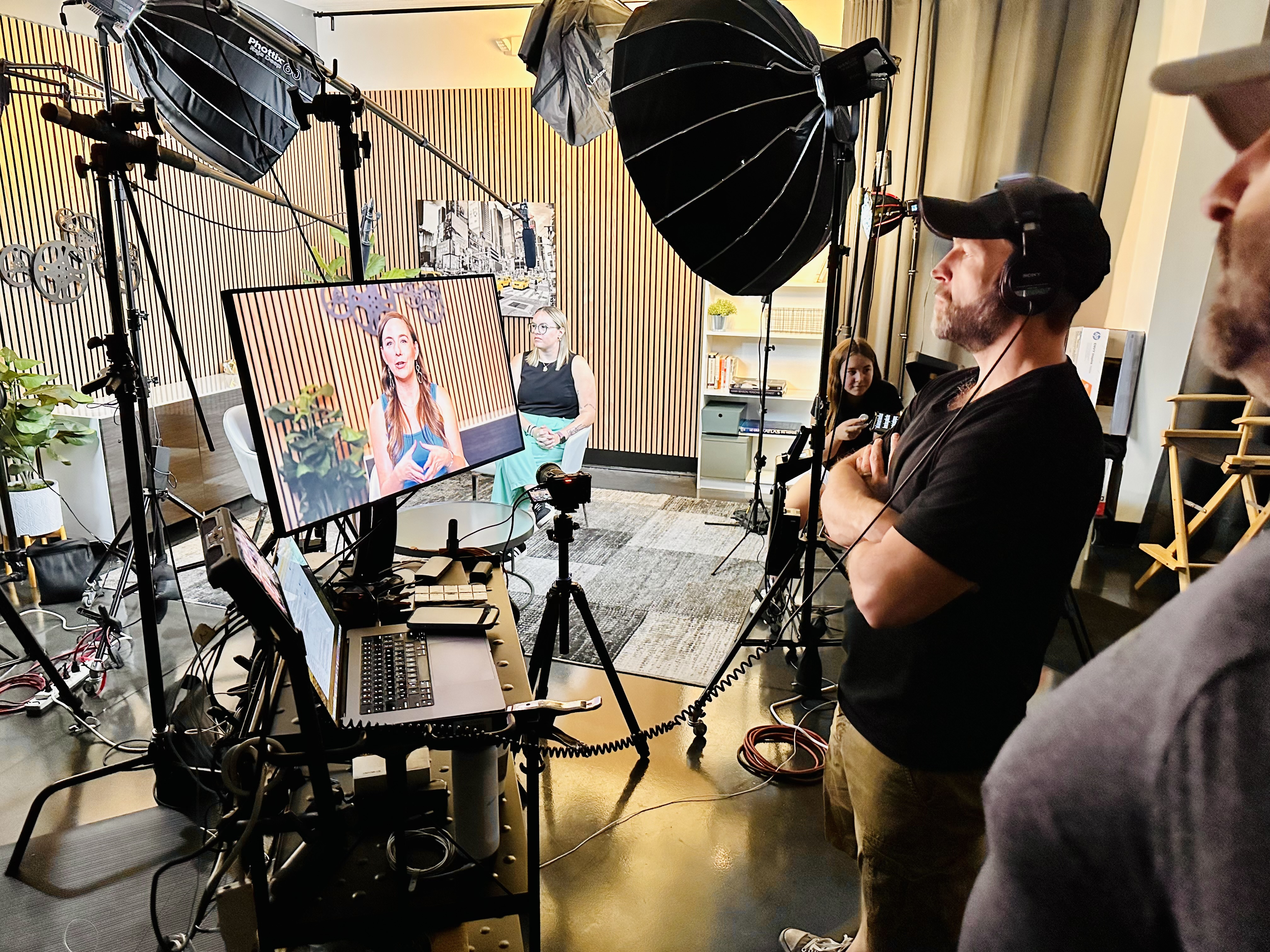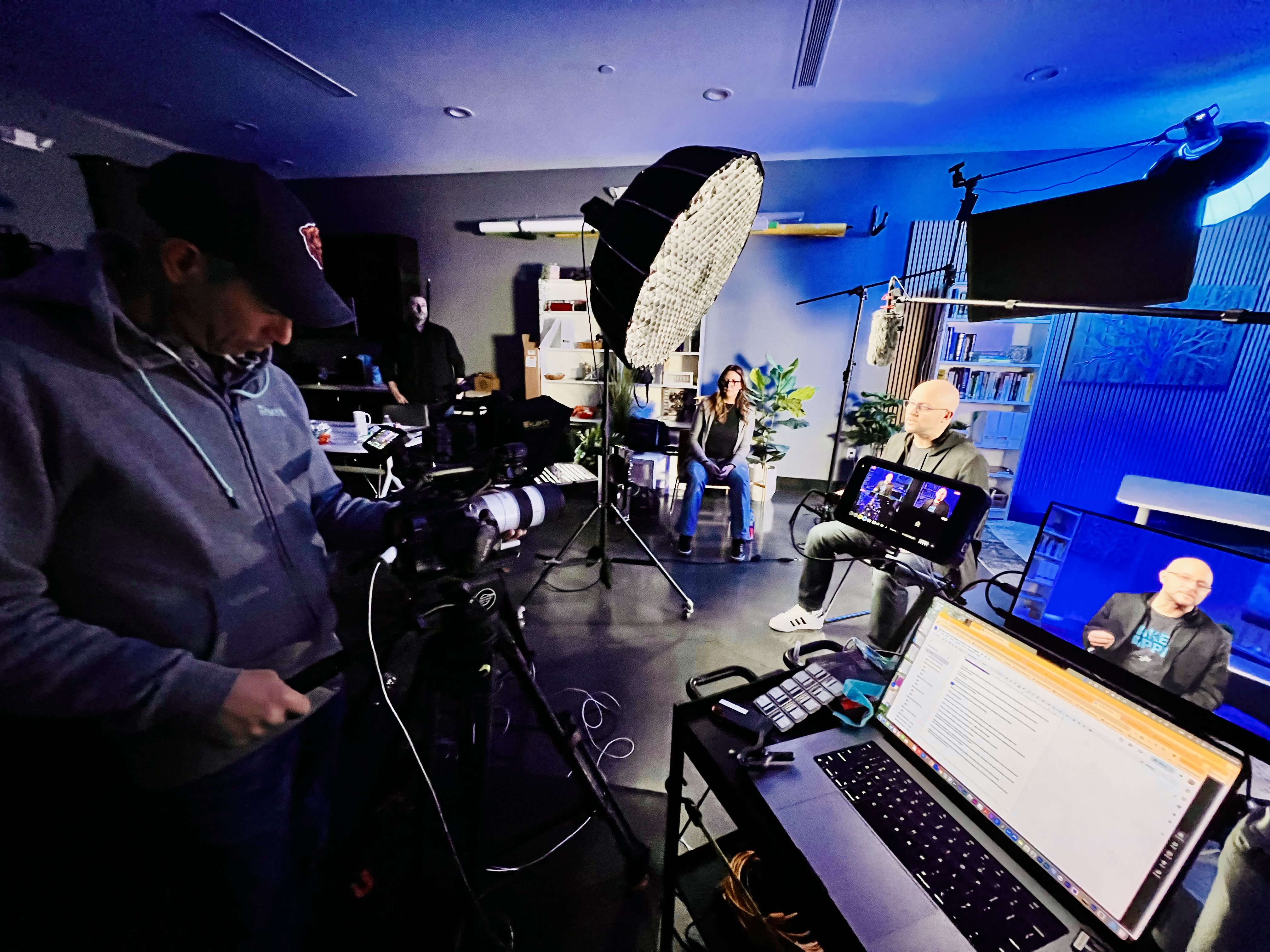



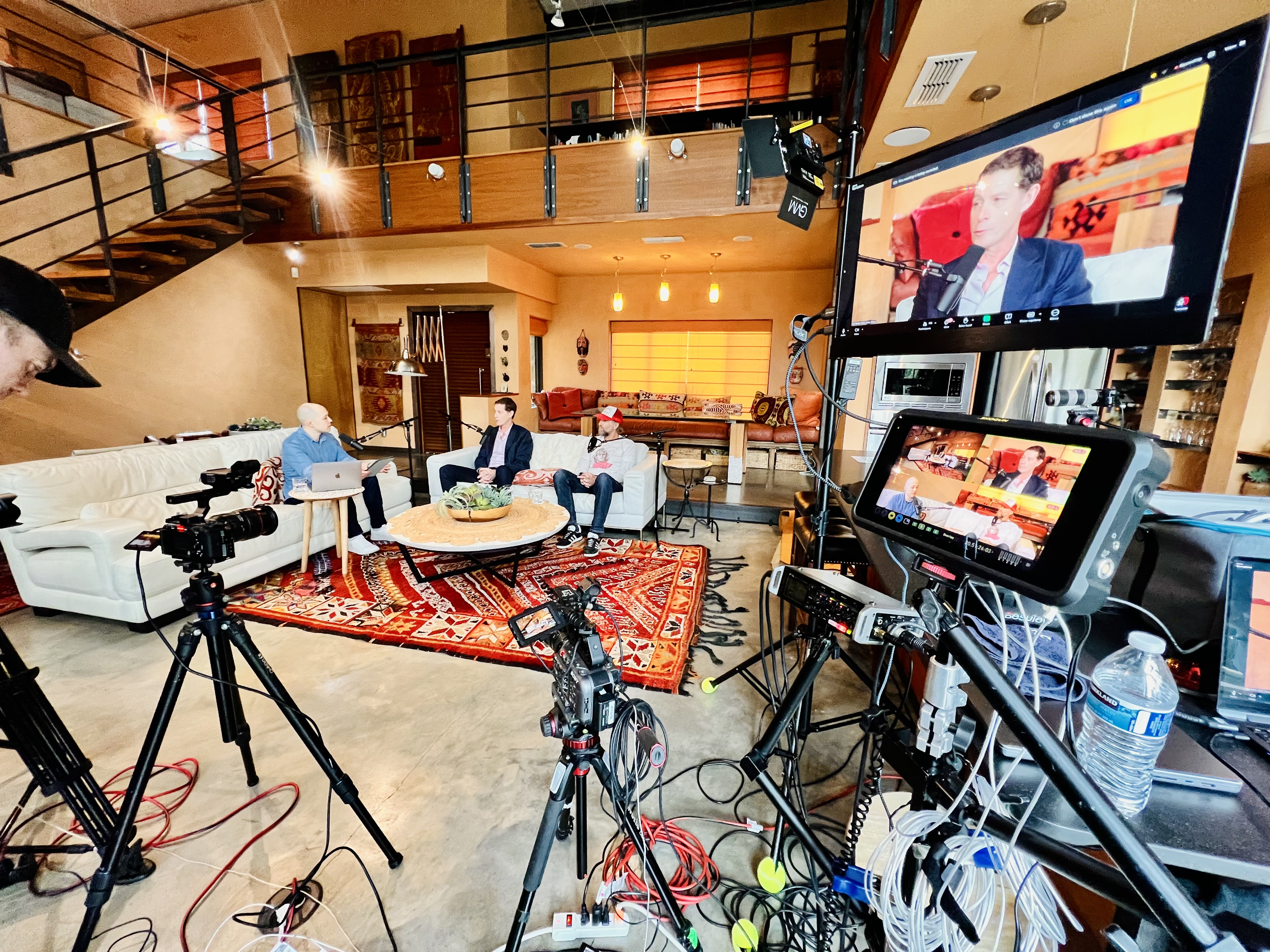
The short answer: not every AI tool belongs in a professional production workflow, and the question of where your client's data goes is not paranoia. It is a production decision. At Mainstage, we treat AI the same way we treat any piece of gear or software: it earns a place in our workflow by making the work better and keeping the client's assets safe, or it does not come in at all.
Why "Intelligence Sovereignty" Is a Production Problem, Not Just a Tech Problem
On a recent episode of the All-In Podcast, Jason Calacanis made a pointed argument for open-source AI models and local hardware as a way for businesses and individuals to maintain what he called intelligence sovereignty: the ability to control your own AI tools, your own data, and your own outputs without depending on a third-party platform that can change its terms, raise its prices, or simply observe everything you feed it.
His co-hosts Chamath Palihapitiya, David Sacks, and David Friedberg pushed the conversation further into the real-world implications for businesses of all sizes. The throughline was clear: the companies that understand what their AI tools are actually doing with their data will have a structural advantage over those that just adopt whatever is convenient.
That argument lands differently when you are a production studio. We are not running a SaaS product or a hedge fund. But we are handling something equally sensitive: a client's unreleased brand film, a proprietary training course, raw footage of their product, their voice, their story. The question of who can see that material, who trains on it, and who owns the output is not abstract. It is the job.
What "Rolling Your Own" AI Actually Looks Like in a Studio
Running open-source models locally is not as exotic as it sounds. The tooling has matured fast. A capable workstation, a strong GPU, and models like those in the Llama or Mistral families can handle a wide range of tasks that would otherwise require sending data to a cloud API. That includes tasks like generating draft scripts, creating rough transcripts, assisting with metadata and tagging, and supporting early-stage creative ideation.
The key distinction is this: when a model runs locally, the data stays local. There is no third-party server receiving your client's footage description, script, or brand brief. There is no terms-of-service clause about training on inputs. You control the model, the hardware, the output, and the version.
That is not always the right call. Cloud tools are faster to spin up, often better at specialized tasks, and require less internal infrastructure to maintain. The decision is not open-source versus cloud. The decision is which tool touches which part of the work, and what the risk profile of that choice is.
The Real Trade-offs: Speed, Control, and Trust
Here is how we actually think about it at Mainstage.
- Does this tool touch raw client assets? If the answer is yes, we want to know exactly where that data goes. Cloud tools that ingest raw footage, voice recordings, or brand materials need to clear a much higher bar than a tool that helps us format a production schedule.
- Who owns the output? Some AI-assisted outputs carry licensing ambiguity, especially in the creative space. Our clients own their work outright. That means we need to be confident that the tools we use do not muddy that ownership.
- Can we reproduce and explain the result? A black-box model that generates something useful today but cannot be audited or re-run reliably is a liability in a production context where revisions, approvals, and version control matter.
- What happens when the tool changes? Cloud platforms update models, deprecate features, and change pricing. A workflow that depends entirely on one commercial AI provider is a workflow with a single point of failure. Local and open-source tools give us a stable foundation that does not shift under a client project mid-stream.
AI-Accelerated Does Not Mean AI-Handed-Off
The phrase we use internally is AI-accelerated, human-crafted. That is not a marketing line. It describes a real production philosophy. AI helps us move faster through the parts of production that benefit from speed: research, rough drafts, transcription, initial cuts, metadata, and scheduling. Humans make every decision that touches the creative, the strategy, and the client relationship.
Jason Calacanis's intelligence sovereignty framing reinforces something we have believed from the beginning: the studios and agencies that treat AI as a passive vendor relationship will eventually find themselves on the wrong end of a platform decision they did not make. The ones who understand their tools, control their data, and keep humans in the creative seat will deliver better work and earn deeper client trust.
This is also why our AI-accelerated web design and development work is built so that clients own their sites and dashboards outright. No proprietary lock-in. No mystery about what the tool did or where the data went. The same principle applies across every line of our production work.
What This Means If You Are Hiring a Production Studio
If you are a marketing leader, an L&D manager, or a founder evaluating a production partner, here are the questions worth asking before any AI-assisted work begins.
- Which AI tools will touch my raw footage, scripts, or brand assets?
- Where does that data go, and does the provider train on it?
- Who owns the AI-assisted outputs, and is that clearly documented?
- What happens to our project if a tool you rely on changes or disappears?
- Is there a human making every final creative call, or is the AI generating finished deliverables without review?
A production partner who cannot answer those questions clearly is not being evasive on purpose. They probably just have not thought it through yet. That gap matters when the work is your brand.
The Studio Perspective on Open Source Going Forward
The open-source AI ecosystem is moving fast. Models that required serious infrastructure a year ago now run comfortably on a well-configured workstation. The gap between open-source capability and commercial-API capability is narrowing in most of the tasks that matter to a production workflow. That trend favors studios willing to invest in understanding the tools rather than just subscribing to them.
We are not ideologically committed to open source for its own sake. We are committed to control, quality, and client trust. Right now, a hybrid approach, local models for sensitive or asset-adjacent tasks, carefully evaluated cloud tools for speed and scale elsewhere, gives us the best of both. That calculus will keep shifting, and staying current with it is part of the job.
If you want to talk through how we think about AI in a specific production context, whether that is a brand film, a training course, a podcast, or a web project, we are glad to walk through it. Explore our production work or reach out to book a conversation with David and the team.