


The most important creative decisions in a production happen after capture, not during it. That has always been true in editing suites and color rooms, but AI has amplified the gap between teams that understand that and teams that do not. A turnkey production team today uses AI to compress the mechanical work of post-production so that human judgment, story instinct, and strategic thinking fill the hours that used to go to transcription, rough assembly, and format conversion. The result is finished work that gets to the audience faster and lands harder.
TL;DR: AI accelerates the unglamorous middle of production so your team can spend more time on the creative and strategic decisions that audiences actually feel. The trick is knowing which tools solve your real problem and which ones just add complexity. Here is what end-to-end production looks like when that balance is right.
Why Post-Capture Is Where the Real Work Lives
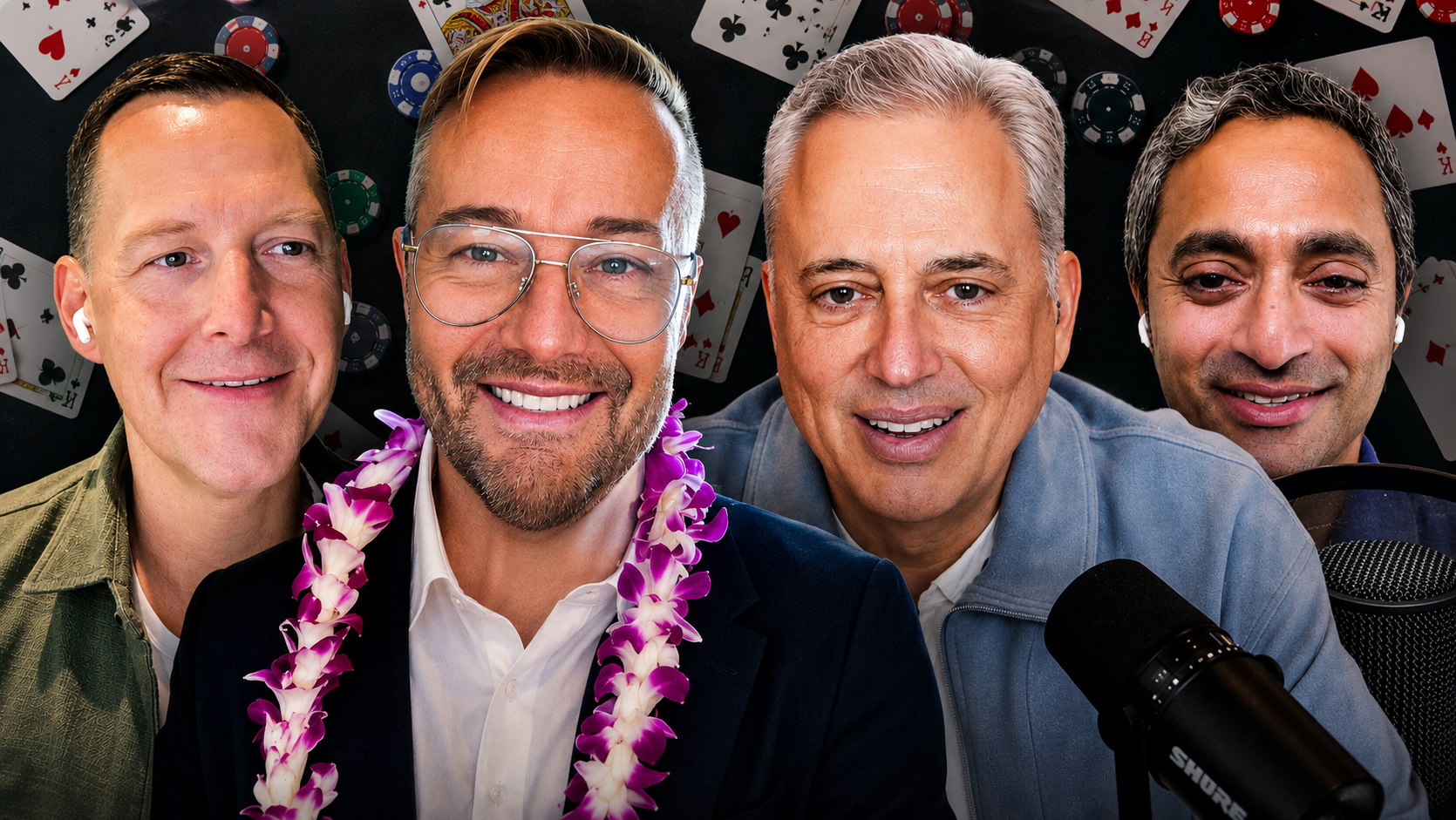
There is a persistent myth that a great shoot solves everything. It does not. Raw footage is raw material. Story, pacing, tone, structure, and message are all built in post. This is not a new idea, but as the hosts of How AI Is Redefining What It Means to Be Creative on a16z Deep Dives explore, the post-capture phase has seen a creativity explosion in the AI era. The range of what is now possible after you press stop is genuinely new territory.
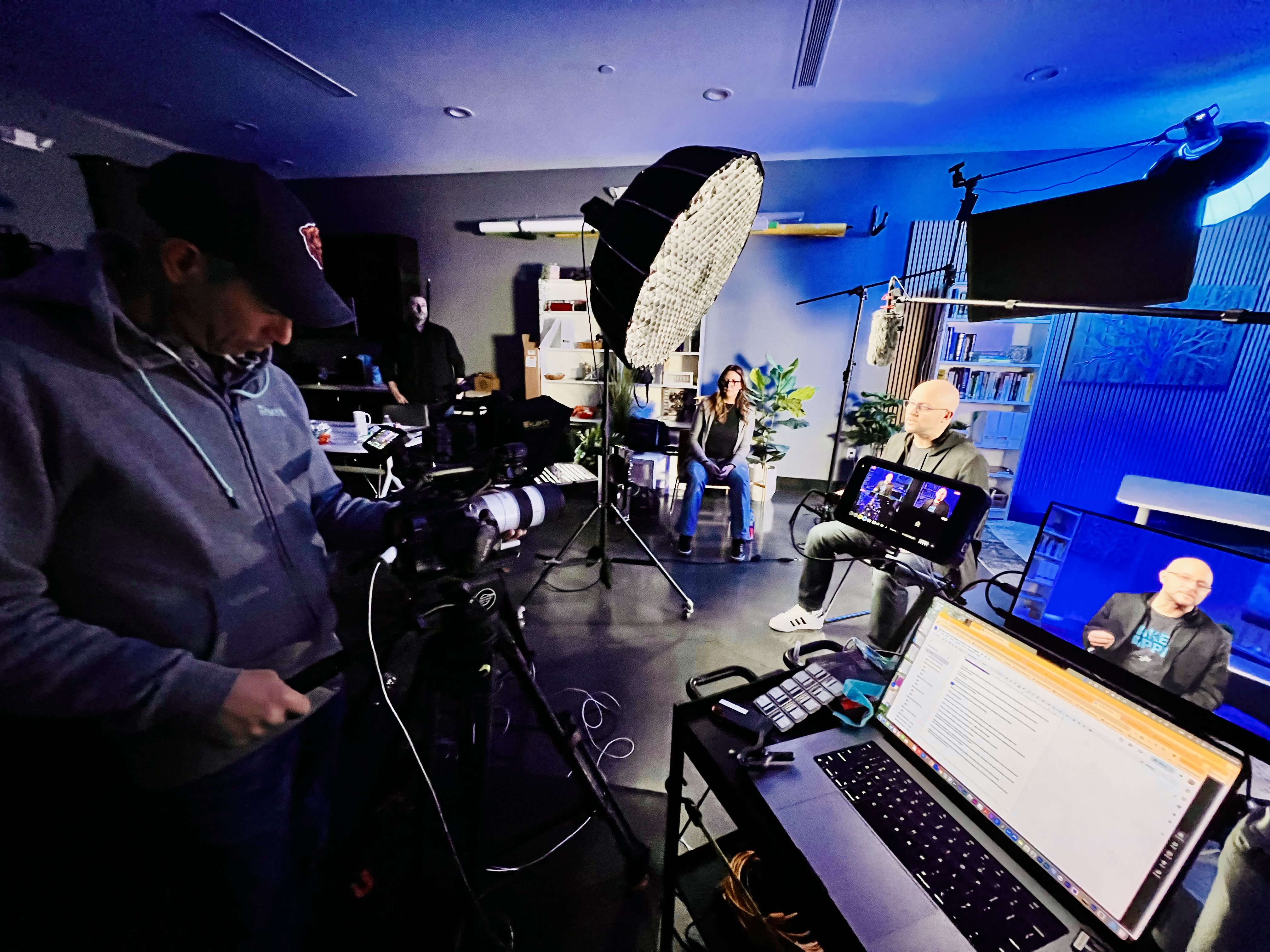
At Mainstage, we build every project around that reality. Pre-production sets the strategic intent. The shoot captures the raw material. But the bulk of where a project succeeds or fails is in the decisions made during edit, sound design, color, motion graphics, and final delivery. That is where we invest the most deliberate human attention.
The Simpler Tool Is Usually the Right Tool
One of the most honest and practically useful points raised in the a16z Deep Dives episode is that researchers working with AI tools often discover that the useful tools are simpler than the cutting-edge ones. The bleeding edge is exciting. It is also frequently fragile, slow to integrate, and full of failure modes that eat production time.
We have found the same thing on production floors. The AI tools that have genuinely changed our workflows are the ones that do one thing reliably: transcription that is accurate enough to build an edit from, noise reduction that does not introduce artifacts, scene detection that shaves hours off ingest. These are not glamorous capabilities, but they free up the hours that matter.
The lesson is not to ignore new tools. It is to ask a hard question before adopting any of them: does this solve the problem I actually have, or does it solve a problem I thought was interesting? At Mainstage, our answer to that question drives every workflow decision we make.
What End-to-End Production Actually Looks Like in Practice
Here is what a typical project moves through when a single team owns it from concept to delivery.
- Discovery and strategy. Before a camera is unpacked, we align on the outcome. Who is the audience, what do we want them to feel or do, and how will we know the work succeeded? This shapes every downstream decision.
- Pre-production and scripting. We use AI-assisted research and outline tools to build scripts and shot lists faster, but every word is reviewed and edited by a human who understands the brand voice and the intended emotional arc.
- Production. The shoot itself. Capture quality matters here, but our director is thinking about the edit the entire time, making choices on set that reduce ambiguity in post rather than creating more of it.
- Post-production assembly. AI transcription turns hours of footage into a selectable, searchable document. Rough assembly happens against a clear story structure. This is still deeply human work; the transcript just means we spend our time choosing the best moments rather than finding them.
- Craft edit, color, and sound. This is where human judgment is irreplaceable. Pacing, emotional beats, color temperature as a storytelling tool, music that earns its place rather than filling silence. No AI makes these calls for us.
- Motion graphics and brand integration. Lower thirds, end cards, chapter markers, brand-consistent typography. We build these to spec so deliverables are ready to publish, not ready for one more round of revisions.
- Delivery and distribution prep. Format versioning for different platforms, closed captions, aspect ratio cuts, thumbnail assets. All part of the same project, not a separate conversation.
This is what turnkey actually means: one team, one through-line, and a finished product that is ready to work.
The Human Decisions AI Cannot Make
AI can tell you where the pauses are in an interview. It cannot tell you which pause is the one that makes an audience lean in. It can generate a music suggestion. It cannot feel whether that suggestion undercuts the emotional honesty of the scene it is scoring. It can produce a color grade preset. It cannot judge whether that grade matches the brand promise your client has spent years building.
This is not a criticism of AI tools. It is a description of what they are. They are leverage for people who already know what good looks like. In the hands of an experienced producer and director, they are transformative. On their own, they produce work that is technically competent and creatively inert.
David Pichette, who leads production at Mainstage, frames it this way: AI handles the carrying. Humans do the deciding. Every project we deliver reflects that division of labor.
Why a Turnkey Team Changes the Equation
Fragmented production, where you hire a crew for capture, a separate editor, a freelance colorist, and a motion graphics person, creates handoff risk at every seam. Context gets lost. Strategic intent drifts. The person finishing the project may have never spoken to the person who conceived it.
When one team carries a project end to end, AI-accelerated workflows compound differently. Decisions made in pre-production inform how footage is ingested. Story structure decisions made in the edit inform how graphics are built. The person grading the color was in the room when the shot was designed. That continuity is not a luxury. It is what makes the finished work coherent.
This is especially true for complex deliverables like corporate training and e-learning video, where instructional structure, on-screen assets, and narrative pacing have to work together from the first frame to the last, or for brand films and commercials where every element either reinforces the brand story or erodes it.
The Right Question for Decision-Makers
If you are evaluating production partners, the most useful question is not what tools they use. It is how they decide which tools to use, and who is accountable when a tool does not perform. A team that can answer that question clearly has done the hard work of integrating AI into real production practice. A team that leads with a tool list has not.
At Mainstage, our answer is simple. We start with the outcome you need. We choose the workflow that gets us there with the least friction and the most craft. AI accelerates the parts that benefit from acceleration. Humans drive every decision that the audience will actually feel.
If you are ready to see what that looks like for your next project, explore our video production work or reach out to book a call with David and the team. We are happy to walk you through the process from the first strategy conversation to final delivery.