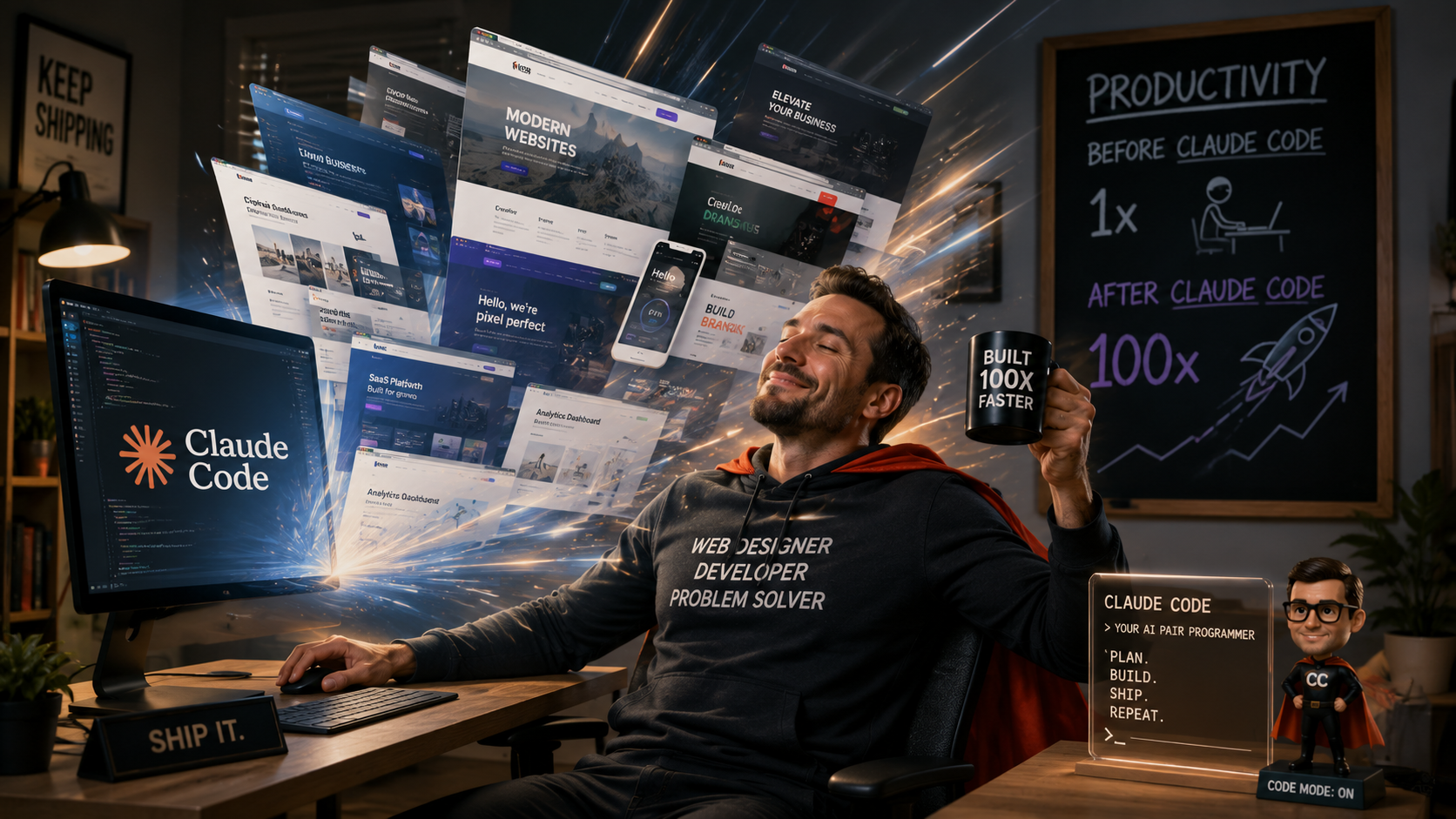


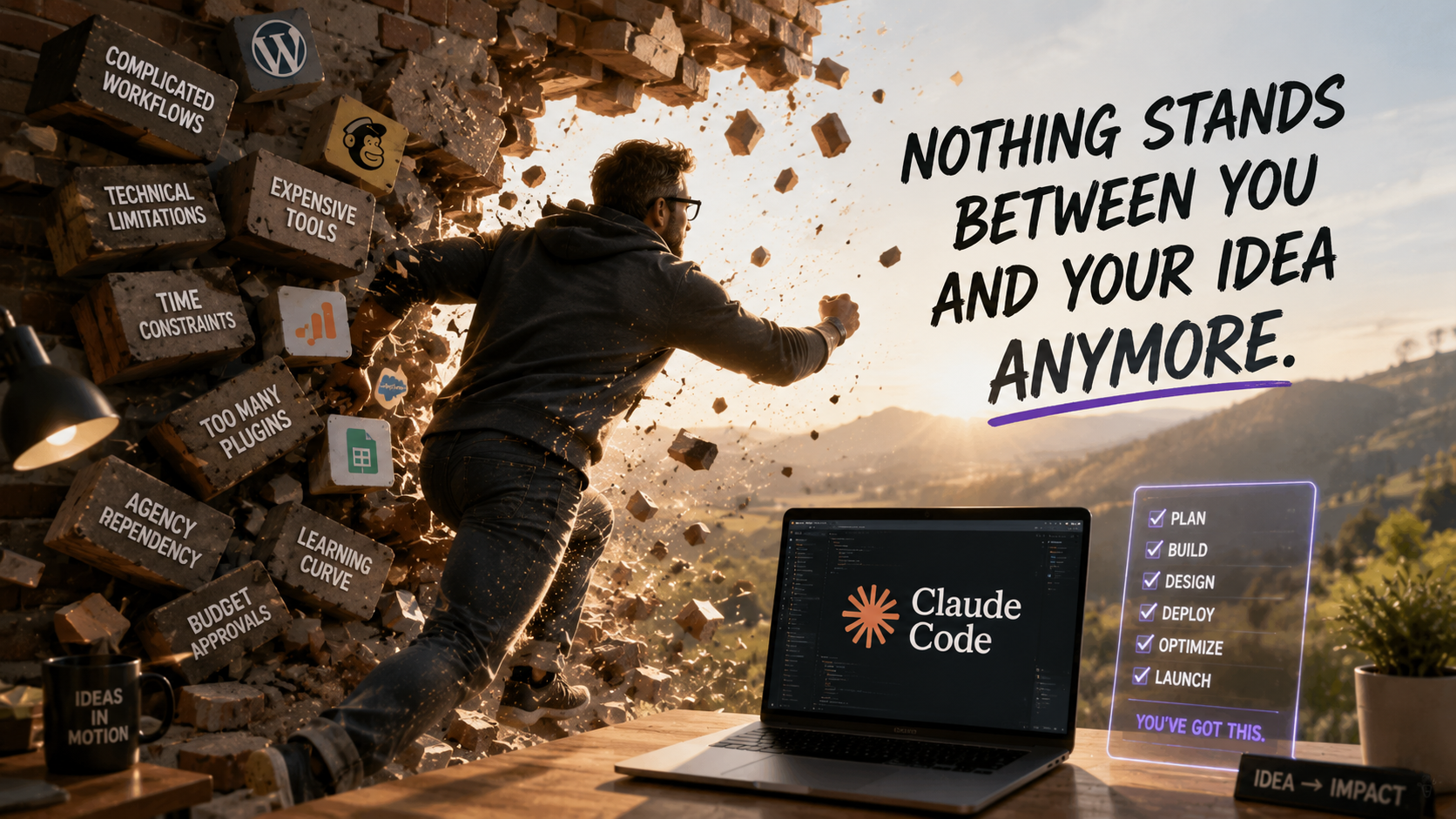
The biggest thing AI has done for creators, founders, and marketers is not replace anyone. It has removed the friction that used to stand between a great idea and a finished result. The wall of complexity, cost, and wait time that once separated "I have an idea" from "here it is, live and working" is thinner than it has ever been. If you have clarity on what you want to achieve, the path to getting there has never been more direct.
The Old Obstacle Course
Not long ago, turning a business idea into something real meant running a gauntlet. You needed a copywriter, a designer, a developer, a video crew, an editor, a strategist, and a project manager just to get a campaign off the ground. Each handoff added time. Each specialist added cost. Each round of revisions added another week to the calendar.
The idea itself often survived. But it arrived late, over budget, and a little bruised. The people with the most creative energy spent most of their time managing the process instead of driving the vision.
That is the middle noise AI is dissolving.
What AI Actually Removes
AI does not replace judgment, taste, or strategy. What it removes is the grunt work that used to live between a decision and its execution. Specifically:
- First drafts. Copy, scripts, outlines, and concepts that used to take days now take minutes. The human edits and elevates. The blank page is no longer the enemy.
- Technical barriers. Layouts, code structures, image treatments, and design frameworks that once required deep specialist knowledge are now accessible to anyone with a clear direction.
- Iteration time. Testing five versions of a headline, a thumbnail, or a page layout used to mean five rounds of revisions. Now it means an afternoon.
- Coordination overhead. When one integrated team uses AI tools across every stage of production, the back-and-forth between departments shrinks dramatically.
The result is a production environment where the idea is always in the lead. The tools follow it, not the other way around.
The Empowerment Is Real, But So Is the Craft
Here is the part worth saying clearly: AI empowers the person with the vision. It does not replace vision.
A faster path to a bad idea is still a bad idea. What AI changes is that good ideas now reach the world with far less resistance. The founder who used to need six months and a significant budget to launch a brand can now move in weeks. The marketing director who used to wait two months for a training video can now see a finished cut in a fraction of that time. The hospitality group that needed a full agency retainer to keep their content fresh can now operate like one.
The craft still matters. Judgment still matters. Knowing what the audience needs, what the brand stands for, and what outcome you are actually trying to drive, that is still the work. AI accelerates everything after that moment of clarity.
What This Looks Like in a Real Production
At Mainstage, we build AI into every stage of our process, not as a shortcut, but as a force multiplier. When a client brings us an idea, we use AI to move through strategy, scripting, design, and development faster than a traditional workflow allows. Our producers and director still shape every decision. Every frame, word, and interaction is crafted by humans who care about the outcome.
But because AI handles the repetitive and the mechanical, we spend more of our time on the things that actually determine whether a project succeeds: the story, the structure, the experience, the result.
That approach shows up across everything we build, from brand films and commercials to corporate training video to AI-accelerated web design and custom analytics dashboards. The tools change. The producer-led approach does not.
How to Think About Your Own Idea Right Now
If you have been sitting on an idea because the path to executing it felt too complicated, too expensive, or too slow, it is worth revisiting that assumption. The landscape has shifted.
Ask yourself these three questions:
- What is the outcome I actually need? Not the deliverable, the outcome. A course that employees finish. A website that converts. A video that makes the brand feel real.
- What has been the biggest obstacle? Time, cost, internal bandwidth, or not knowing where to start? All of those have a shorter answer than they used to.
- Do I need to own this process, or do I need to own the result? If the result is what matters, a production partner who uses AI intelligently can get you there faster and cleaner than building a DIY stack from scratch.
The Competitive Advantage Is Timing
Speed is a strategy. The team that can move from idea to execution in weeks instead of months captures attention, tests faster, learns sooner, and builds momentum while competitors are still in planning meetings.
AI is not a trend to monitor. It is a production reality that is already separating the teams who move from the ones who wait. The ideas were never the bottleneck. The middle was. And now the middle is smaller than ever.
If you have an idea worth building, the clearest path to it is a conversation about outcomes. See how Mainstage builds AI-accelerated work, or reach out to talk through what you are trying to create. We would love to help you close the gap.