


A true video production partner owns the full pipeline from concept to delivery, which means your brand's intellectual property, your strategy, and your finished assets never leave a single accountable team. The moment you fragment that pipeline across a rotating cast of vendors, you are not just risking quality. You are giving away pieces of your brand's most valuable proprietary knowledge, one handoff at a time.
TL;DR: Fragmented video production exposes your brand IP to vendors who walk away with your scripts, your footage, and your strategy. A turnkey partner who controls the full pipeline keeps all of that inside one accountable team, protecting what you own and delivering a finished result, not a pile of raw files.
The Sovereignty Concept That Every Brand Marketer Should Steal
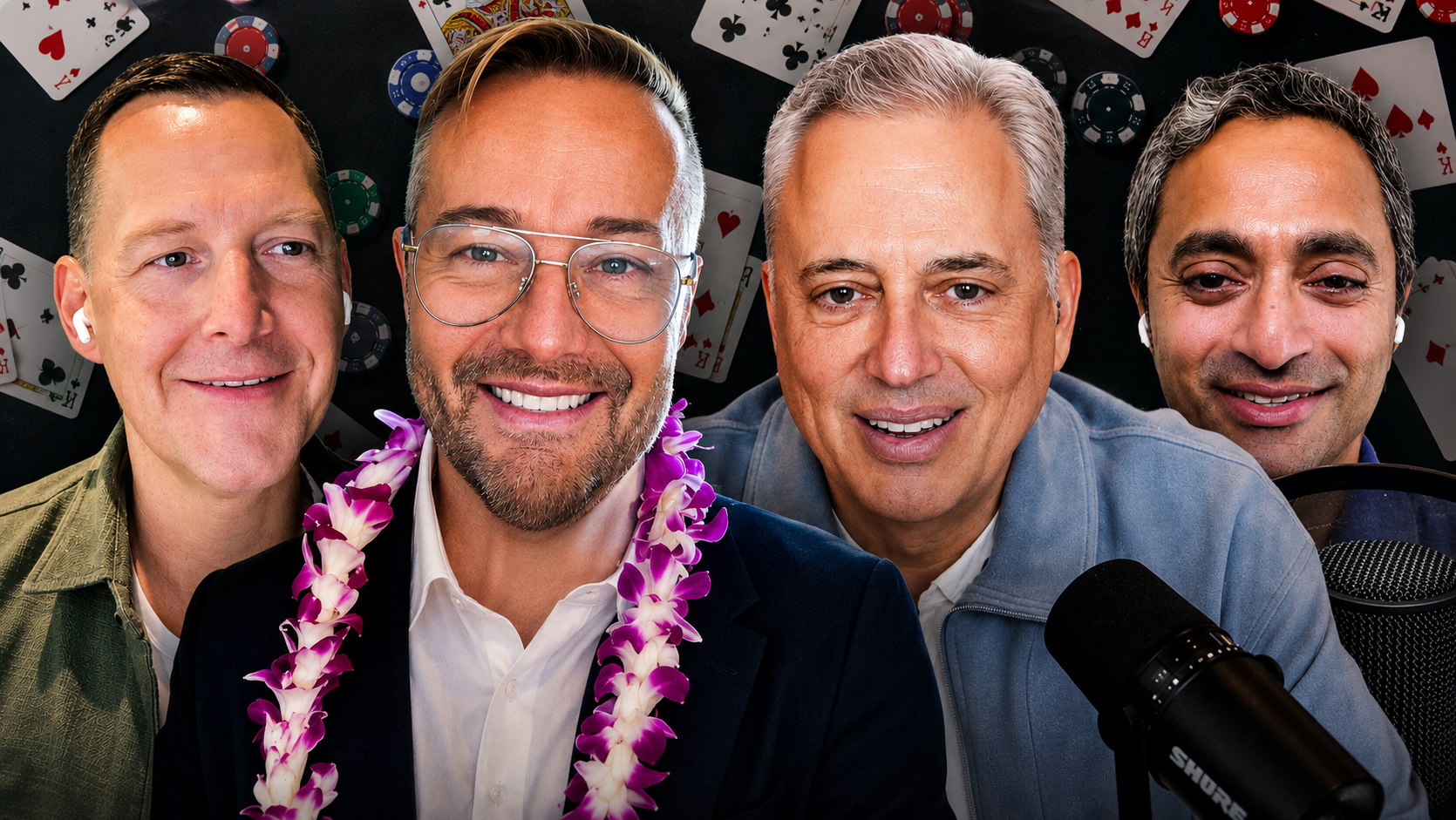
In a recent episode of the All-In Podcast, Jason Calacanis, Chamath Palihapitiya, David Sacks, and David Friedberg discussed why controlling your own compute, data, and model weights is a strategic imperative, not just a technical preference. Their argument was simple: if an outside actor can access your proprietary inputs, they can walk away with the intelligence those inputs represent. Sovereignty, in that framing, means no critical asset leaves your control.
That idea translates directly to video and brand production, even if the stakes look different on the surface. Your brand script is a proprietary asset. Your raw footage is a proprietary asset. Your messaging strategy, your shot list, your unreleased campaign direction, and even the cutting-room-floor material that did not make the final cut are all proprietary. Every vendor who touches one of those pieces walks away with a slice of your brand's intelligence.
How the Fragmented Model Actually Works Against You
Most brands do not realize how fragmented their production workflow already is. A typical fragmented engagement looks something like this: a marketing agency writes the brief and the script, a freelance camera crew shoots the footage, a post-production house edits it, a motion graphics studio adds animation, a separate vendor handles music licensing, and then everything gets delivered to the brand in a format that no single vendor fully understands end to end.
Each of those handoffs is a leak. Consider what each party now holds:
- The agency has your strategic brief and your messaging architecture.
- The camera crew has your raw footage, including takes and alternate angles you never intended to be seen.
- The post house has a rough cut that reveals your editorial thinking before it was polished.
- The motion graphics vendor has learned what your brand system looks like under the hood.
None of those vendors signed a single unified agreement with you. None of them are accountable to one another. And none of them have a stake in whether the finished piece actually performs for your business. They each delivered their slice and moved on.
What a Sovereign Pipeline Actually Looks Like in Production
A turnkey partner runs the opposite model. Strategy, scripting, directing, shooting, editing, graphics, sound, and final delivery all live inside one team under one producer who is accountable from the first conversation to the last file. That is not a staffing preference. It is a structural decision that protects your brand at every stage.
At Mainstage, every video production engagement works this way. We develop the concept, write the brief, direct the shoot, edit the footage, and deliver finished, client-owned files. The raw footage, the project files, the licensed assets, the final deliverables, all of it belongs to you. No file disappears into a vendor's archive. No strategic insight gets recycled into the next client's campaign.
This matters practically in several ways:
- Confidential messaging stays confidential. Your unreleased campaign direction does not get passed through four inboxes before the launch date.
- Raw footage is controlled. Outtakes, alternate cuts, and b-roll that did not make the final edit are yours to use, archive, or destroy. They do not live on a freelancer's hard drive.
- Brand standards are maintained. When one team carries the project all the way through, the brand voice and visual identity stay consistent. There is no translation loss between the writer's intent and the editor's interpretation.
- You have a single point of accountability. If something is wrong, one call fixes it. You are not mediating a dispute between the production crew and the post house about whose fault the error was.
The Hidden Cost of Handing Off Your Brand Intelligence
Brands often focus on the obvious risks of fragmented production: inconsistent quality, missed deadlines, budget overruns. Those are real. But the subtler cost is harder to quantify and more damaging over time.
Every vendor who handles your creative work learns something about how your brand thinks. They learn your positioning before it is public. They learn which messages you tried and abandoned. They learn what your leadership cares about and how it gets translated into visuals and words. Over a multi-year relationship with a rotating roster of vendors, a meaningful amount of that intelligence disperses into the market.
A competitor who hires the same freelance crew you used last year is not starting from zero. They are starting with a team that has already learned your production rhythms, your aesthetic preferences, and sometimes your strategic direction. That is not paranoia. That is how creative markets work.
A sovereign production partner treats your brand intelligence the way Chamath, Sacks, Friedberg, and Calacanis argue organizations should treat their model weights: as something too valuable to let outside actors touch without strict controls and clear ownership.
Ownership Is Not Just About Files. It Is About Strategy.
There is one more dimension worth naming. When production is fragmented, strategy tends to get orphaned. No single vendor owns the question of whether the video is actually working. The agency measures the brief. The production crew measures the shot. The post house measures the edit. Nobody measures whether your audience completed the video, shared it, or converted because of it.
A producer-led engagement starts with outcomes and ends with them. The first conversation at Mainstage is about what the finished piece needs to accomplish, not just what it needs to look like. That strategic thread runs through every decision, from casting and location to pacing and call to action. And because we deliver the finished asset rather than handing off to another team, we stay connected to whether it performs.
That is the difference between a subcontractor who delivers a task and a partner who delivers a result.
What to Look for When Evaluating a Production Partner
If you are assessing whether a production company operates as a sovereign partner or a subcontractor, here are the practical questions to ask:
- Who writes the script? If the answer is "we can bring in a writer," the pipeline is already fragmented.
- Who owns the raw footage after delivery? If the answer is unclear, that is a problem.
- Who is the single point of accountability if something goes wrong? If no clear name comes up immediately, accountability is diffused.
- What happens to project files after the job closes? A turnkey partner has a clear answer. A subcontractor often does not.
- Does the team start with your business objective or with your shot list? The order matters. Strategy first is the mark of a producer. Shot list first is the mark of a crew for hire.
The Mainstage Approach
Mainstage Multimedia is built around the sovereign model. We are a Las Vegas-based, nationally working production studio that plans, produces, and delivers finished work under one roof. David Pichette leads every engagement as producer and director, which means the strategic intent of the project stays connected to every production decision from the first treatment to the final export.
Your scripts, your footage, your strategy, and your files are yours. They do not get shared across vendor relationships, recycled into other projects, or left on a freelancer's hard drive. You get a finished, ownable asset and a team that cares whether it performs.
If you are ready to work with a production partner who thinks about your brand the way a sovereign thinks about its most critical assets, explore our video production work or reach out to book a call with our team.