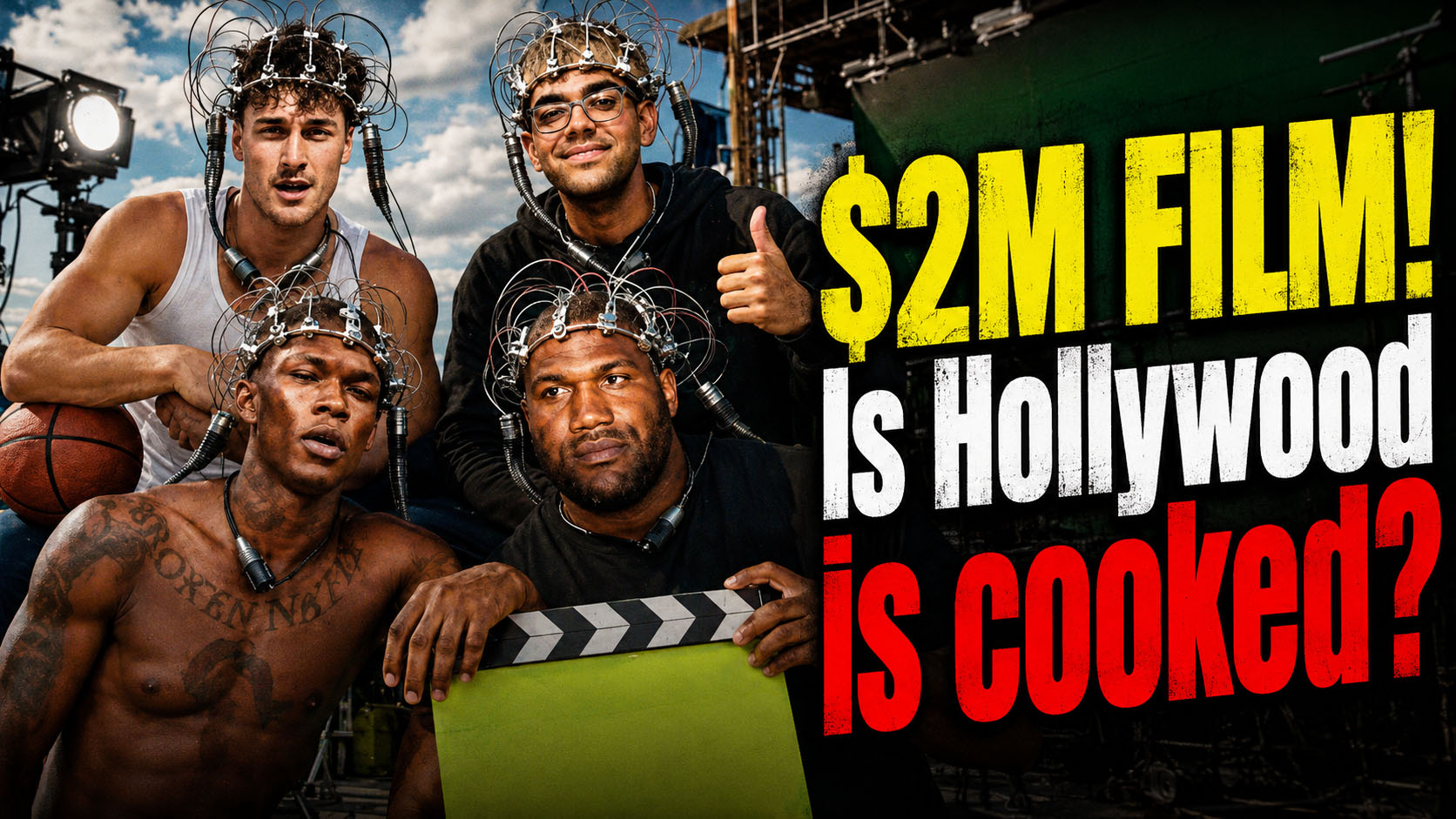



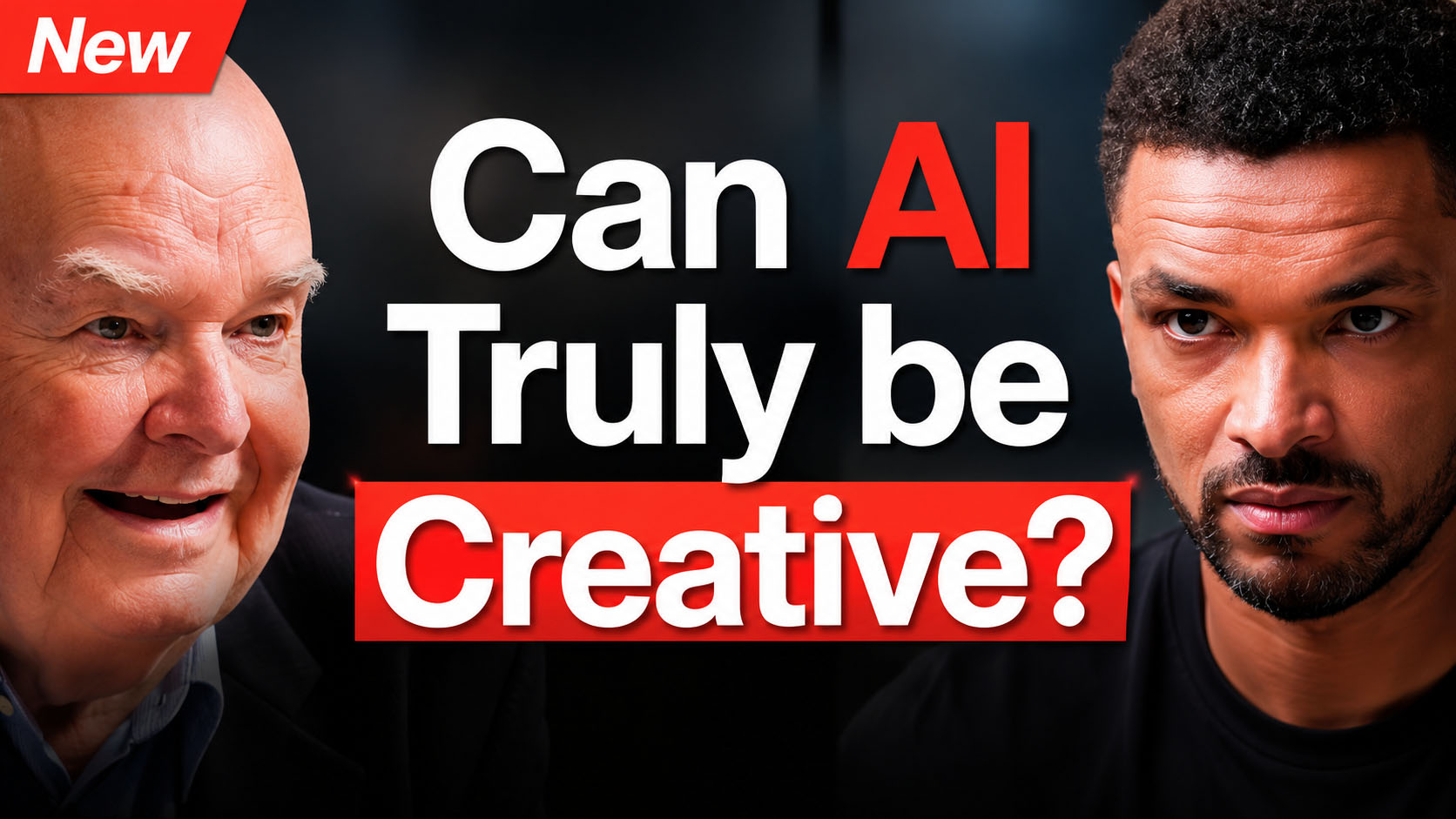
AI can produce a painting, write a screenplay, and compose a film score in seconds. But can it actually be creative? The short answer is: not in the way humans are. AI generates outputs by recognizing and recombining patterns from data it was trained on. It has never understood a single thing it has produced. That distinction matters enormously, especially if you are a brand leader, a filmmaker, or anyone who needs work that connects with real people.
TL;DR: AI is a powerful pattern engine, not a thinking agent. It can accelerate production, but it has no understanding of what a child is, what grief feels like, or what makes a brand human. Those judgments belong to producers, directors, and strategists who bring lived experience to every decision. At Mainstage, we use AI to move faster while humans craft every detail that actually matters.
The Lennox Question That Should Stop Every Marketer in Their Tracks
On the Diary of a CEO podcast, Oxford mathematician and philosopher John Lennox raises a challenge that cuts through all the AI hype: does the machine understand what it is producing? He draws a sharp line between computation and comprehension. A language model can write a tender story about a child, but it has never seen a child, never held one, never felt the weight of protecting something small and vulnerable. It has only ever seen tokens, the statistical residue of words that humans used when they wrote about those experiences.
That is not a small limitation. It is the whole thing.
Understanding is what allows a creative director to know that a certain piece of music will feel manipulative rather than moving. It is what allows a producer to look at a script and say, "This line will land wrong with a parent." No model trained on text can access that because it was never in the room when any of it happened.
What "Creativity" Actually Requires
Creativity is not novelty for its own sake. It is the ability to make something that resonates, that communicates meaning from one conscious mind to another. That process has at least three components that AI cannot genuinely replicate:
- Intentionality. A human creator chooses to say something specific to someone specific for a reason. AI has no intention. It has a prompt and a probability distribution.
- Embodied experience. Lennox's point about children applies everywhere. Understanding what hunger is, what joy looks like in a crowded room, what it means to lose something irreplaceable, these come from living, not from processing data about living.
- Judgment about meaning. The hardest creative decisions are not about what looks good. They are about what is true. Is this story honest? Does this brand film reflect what this company actually is? Only someone with genuine understanding can answer those questions.
Where AI Genuinely Helps Production
None of this means AI is useless in a creative workflow. It means you have to be precise about what it is actually doing.
At Mainstage, we use AI tools across pre-production, post-production, and web development, and they have made us meaningfully faster. Here is where AI earns its place:
- Research and brief synthesis. AI can scan, summarize, and surface relevant material quickly. A strategist still has to decide what matters.
- Script and concept drafting. AI can generate a first pass that gives a human editor something to react to. The draft is never the answer, but it can compress the time to a good answer.
- Asset generation for iteration. Mood boards, rough visual concepts, and layout options can be explored faster. The producer still makes the call.
- Post-production efficiency. Transcription, rough cuts, color grading assistance, and noise reduction tools all move timelines without replacing the editor's eye.
- Web and analytics work. Our AI-accelerated web design and development uses machine speed to handle the structural and technical groundwork so our team can focus on the decisions that shape how a brand actually feels online.
In every case, the human is the author. The AI is a fast, tireless, and utterly uncomprehending assistant.
The Risk of Mistaking Output for Understanding
The danger Lennox points to is not that AI will become creative. The danger is that humans will mistake fluent output for genuine understanding and stop applying their own judgment. A generated script that sounds plausible is not the same as a script that is true. A brand film produced entirely by prompts might be competent and completely hollow.
Audiences feel the difference even when they cannot name it. A child on screen in an AI-directed spot is just a visual element. A child on screen in a story told by people who understand childhood carries weight. That weight is what makes people stop scrolling.
This is precisely why the producer-led model exists. Someone has to hold the meaning of the work and protect it through every decision, from the first strategy conversation to the final export. That is not a function you can automate.
What This Means for Brands Investing in Content
If you are a marketing leader or a brand executive deciding how to invest in video, podcasts, or creative content, the Lennox framework gives you a useful filter. Ask this about any piece of work you commission: does the team behind it understand what this content is supposed to mean and to whom?
If the answer is a production company handing you prompts and renders, you may get volume. You will not get resonance.
If the answer is a team that starts with your audience, your outcomes, and the specific human truth you are trying to communicate, and then uses every tool available, including AI, to get there faster, you have found a real creative partner.
That is the model we work from at Mainstage on every project, whether it is a brand film or commercial, a produced podcast series, or a corporate training course built for real learner outcomes.
The Bottom Line
John Lennox is asking the right question. Creativity requires understanding, and understanding requires consciousness, experience, and the ability to care about meaning. AI has none of those things. It is extraordinarily useful precisely because humans who do have those things can direct it. The machine does not know what a child is. Your audience does. Make sure the people producing your content do too.
If you want to talk through how a producer-led approach, with AI used intentionally rather than as a shortcut, can make your next project sharper and faster, book a call with the Mainstage team.