


Artists who thrive long-term are not the ones who master a single tool. They are the ones who stay curious enough to pick up the next one. Phil Tippett's story, from pioneering stop-motion animation to becoming an indispensable force in the CGI era, is the clearest proof of that principle most of us will ever see. And it holds a direct, practical lesson for every creative professional navigating new technology today.
TL;DR: New tools do not replace skilled artists. They raise the stakes for artists who refuse to grow and create enormous opportunity for artists who choose to adapt. Phil Tippett's career is the blueprint. Your craft, judgment, and creative instinct travel with you into every new medium.
The Moment Phil Tippett Thought His Career Was Over
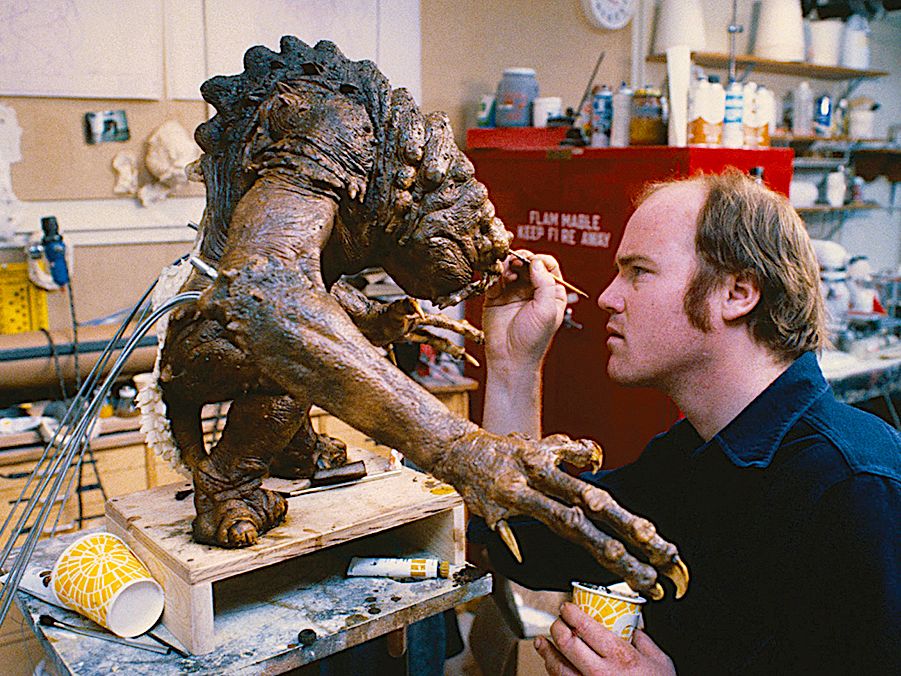
In the early 1990s, Phil Tippett was at the peak of his craft. He had built some of cinema's most iconic creature work using go-motion, his own advancement of traditional stop-motion animation. His credits included the AT-AT walkers in The Empire Strikes Back and the velociraptors in early pre-production work for Jurassic Park.
Then Steven Spielberg saw what Industrial Light and Magic's computer graphics team could do, and the plan changed. The dinosaurs would be rendered digitally. By most accounts, when Tippett heard the news, he told Spielberg, "I think I'm extinct." Spielberg liked the line so much he put it in the film.
But Tippett was not extinct. He was about to become something more valuable than he had been before.
Rather than walking away, Tippett studied the new technology, collaborated with the ILM team, and took on the role of dinosaur supervisor on the film. His job was to bring biological truth and performative instinct to creatures that no computer could invent on its own. The result was a film that still holds up visually decades later, in large part because a master of animal movement was guiding every frame.
The tool changed. The craft did not.
Why New Technology Always Feels Like a Threat First
Every generation of artists faces a version of this moment. Photography threatened painters. Recorded music threatened live performers. Desktop publishing threatened graphic designers. CGI threatened practical effects artists. And today, AI-assisted tools are prompting the same conversation across visual production, design, copywriting, and beyond.
The fear is understandable. When a new tool can replicate the surface appearance of a skill you spent years developing, it is natural to feel the ground shift. But the fear usually misreads what the technology is actually doing.
New tools rarely replace the underlying human judgment that makes great work great. They replace the most repetitive, most mechanical parts of the process. That is not a threat to a skilled artist. It is a redistribution of where the artist's energy goes.
Tippett did not lose his value when CGI arrived. He lost the specific task of physically animating models frame by frame. What remained, and what the production urgently needed, was his eye, his instinct for weight and timing, his understanding of how a living creature moves when it is afraid or hungry or hunting. No render farm could supply that.
The Real Skill Is Never the Tool Itself
This is the point most artists miss when a new technology enters their field: the tool was never the actual skill.
Stop-motion was a tool. The skill was understanding movement, performance, and physical plausibility. A paintbrush is a tool. The skill is composition, color relationships, and the ability to see what is actually in front of you. A camera is a tool. The skill is knowing where to put it, when to cut, and what story you are trying to tell.
When you locate your identity in the tool, any threat to the tool feels like a threat to you. When you locate your identity in the underlying craft and judgment, you become someone who can work across tools. You become more valuable with each transition, not less, because you carry accumulated knowledge that newer practitioners simply have not had time to develop.
This is exactly the posture we take at Mainstage with every new production technology we bring into the studio. We use AI-accelerated tools in our web design and development work, for example, not because they do the thinking for us, but because they compress the time between a strategic idea and a finished, client-owned result. The human judgment about what the client actually needs, what will perform, and what will last, that never gets outsourced.
How to Actually Adapt: A Practical Framework
Tippett's reinvention was not accidental, and it was not painless. It required a specific kind of openness that is worth breaking down into steps any creative professional can follow.
- Get curious before you get defensive. When a new tool arrives in your field, your first job is to understand what it actually does, not what you fear it might do. Tippett engaged with the CGI team. He asked questions. He learned enough to collaborate meaningfully.
- Identify what transfers. Ask yourself what knowledge you carry that is tool-agnostic. A director's sense of pacing transfers across formats. A sound designer's ear transfers across delivery platforms. A brand strategist's grasp of audience psychology transfers across every medium that audience uses.
- Find where your judgment is irreplaceable. New tools create new gaps. CGI could generate a dinosaur. It could not generate the instinct that made the dinosaur believable. Find the gap in whatever new tool is entering your space, and position yourself there.
- Collaborate rather than compete. Tippett did not try to out-code the ILM programmers. He brought what they lacked and let them bring what he lacked. The collaboration produced something neither side could have made alone.
- Give yourself a learning runway. Adaptation is not instant. It requires time, some failure, and a willingness to be a beginner again in a narrow area while remaining an expert in the broader one. Budget for that time deliberately.
Reinvention Is Not a One-Time Event
One of the more uncomfortable truths in Tippett's story is that the reinvention did not stop after Jurassic Park. His studio, Tippett Studio, has continued to evolve through multiple waves of production technology. The pattern repeats. A new capability arrives, the team absorbs it, the underlying craft finds a new expression.
For working artists and creative professionals today, this means reinvention is not a crisis to survive once. It is an ongoing practice to build into how you work. The artists who struggle most are those who treat each adaptation as an emergency. The artists who thrive are those who build a habit of curiosity and treat new tools as raw material rather than competition.
At Mainstage, we see this play out in every line of our work. Brand films and commercials are being shaped by new capture technology, new distribution platforms, and new audience expectations at the same time. Corporate training and e-learning video is being transformed by both AI-assisted production and new research into how people actually retain information. The productions that hold up are not the ones that chased the newest tool for its own sake. They are the ones where a skilled, strategic team used new tools to execute a sharper creative idea.
What This Means for Your Brand or Production Team
If you lead a team of creative professionals, or if you hire outside production partners, Phil Tippett's arc has a direct application for you.
When evaluating a production partner, do not just ask what tools they use. Ask how they think. Ask how they have adapted over time. Ask what they bring to a project that the software cannot. A team that has been through multiple technological shifts and kept producing excellent work has demonstrated something no tool list can show you: the judgment to know what actually matters.
That is the standard we hold ourselves to at Mainstage. We are producers and directors first. The tools, whatever they are at a given moment, are in service of a finished result that moves your audience, builds your brand, and delivers on a business outcome. The approach does not change. The toolkit grows.
The Lesson Phil Tippett Actually Teaches
The most quoted part of Tippett's story is the "I think I'm extinct" line. But the real lesson is everything that came after it. He showed up. He stayed on the project. He brought his whole self, his decades of understanding how creatures inhabit space, and he poured that into a new medium.
The dinosaurs in Jurassic Park move the way they do because a stop-motion artist refused to be stopped.
If you are an artist or creative leader feeling the pressure of a new technology wave right now, that is the story worth sitting with. The tool is not the point. You are the point. Your judgment, your eye, your understanding of what works and why, that is what you bring to the next tool, and the one after that.
Ready to work with a team that takes exactly that approach? Explore what Mainstage produces or reach out to book a call with David Pichette and talk through what your next project actually needs.