


The best producers walk into every project without a formula. They bring experience, taste, and craft, but they deliberately leave their assumptions at the door. That discipline is what separates content that moves people from content that just fills a runtime. It is also the single biggest reason a strategy-first discovery session will outperform a client-supplied shot list every time.
TL;DR: Handing a producer a shot list is like handing a chef a plating diagram before they have tasted the ingredients. The best creative work starts with listening, not executing. At Mainstage, every engagement opens with a blank-slate discovery session because that is where the real story lives.
Rick Rubin and the Power of Arriving Empty
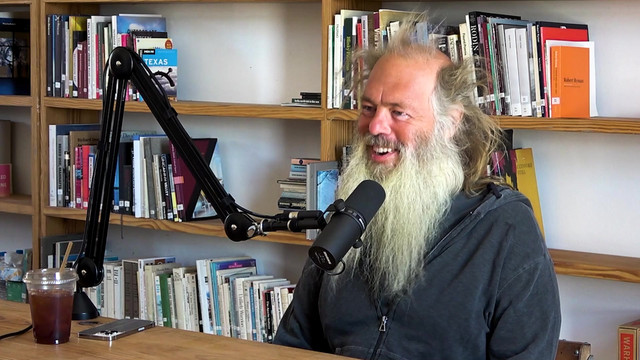
In Rick Rubin's conversation with Lex Fridman on the Lex Fridman Podcast #275, Rubin describes his approach to producing records: he does not arrive with a sound, a genre template, or a predetermined direction. He arrives ready to hear what the artist actually is, and then he helps them become the most honest version of that. The formula comes from the project, not the other way around.
That idea lands hard for anyone who has spent time in video and content production. It is not a music industry quirk. It is a fundamental truth about how good creative work gets made in any medium.
Why Shot Lists Are a Trap
When a client arrives with a shot list, they have already made most of the creative decisions. They have decided what to show, in what order, and often what the tone should feel like. They are hiring a crew to execute their vision rather than a producer to find the right one.
That sounds efficient. It rarely is.
Here is what a preset shot list cannot account for:
- The story angle that only surfaces when you ask the right questions in the room
- The spokesperson who is magnetic on camera but was not on anyone's radar
- The product detail or company value that actually drives purchase decisions, as opposed to the one marketing assumed did
- The visual language that fits the brand's real audience rather than its aspirational one
- The structural choice, testimonial over demo, emotion over feature, that would make the piece perform better
A shot list locks the door before you have found the right room.
What a Blank-Slate Discovery Session Actually Looks Like
At Mainstage, every project begins with a discovery session before a single camera is scheduled or a single frame is storyboarded. We come prepared, but not pre-decided. We bring questions, not answers.
That session typically covers:
- The actual business goal. Not "we need a brand film." What decision do you want a viewer to make after watching it? What does success look like in six months?
- The audience. Who is this for, specifically? What do they already believe, and what do you need to shift?
- The honest story. What is genuinely true about this brand, product, or team that competitors cannot say? We dig for specifics, not taglines.
- The gaps. What have you tried before? What landed flat and why?
- The constraints. Timeline, budget, internal approvals, legal considerations. Real production strategy accounts for all of it.
Only after that conversation do we start shaping a creative direction. The strategy comes from what we learn, not from a template we walked in with.
The Producer Mindset vs. the Crew-for-Hire Mindset
There is a meaningful difference between a production company and a producer-led studio. A crew for hire executes what you hand them. A producer asks whether you are handing them the right thing in the first place.
Rubin's value as a producer was never that he could play every instrument. It was that he could hear the whole piece before it existed and guide the people in the room toward it. That is exactly the role a production studio should play for a brand.
At Mainstage, David Pichette leads every engagement as a producer and director, not as a vendor filling a scope of work. That means we are accountable for the outcome, not just the deliverable. There is a difference.
When Clients Let Go of the Shot List, Here Is What Happens
When clients come in open, a few things consistently happen that would not have happened otherwise:
- The story gets more specific, and specific stories are the ones that travel
- The production plan gets leaner, because we are not shooting what looked good on a list, we are shooting what serves the story
- The final piece has a point of view, which is what makes content memorable rather than merely professional
- The client often says some version of "we did not expect it to go that direction, and it is better than what we had in mind"
None of that happens when the creative decisions are already made before the first meeting.
This Applies Across Every Format We Produce
The blank-slate principle is not just for brand films. It shapes how we approach every format we produce:
- Brand films and commercials: Strategy before storyboard, always. See how we approach video production.
- E-learning and training video: We start by mapping the learning outcome before we write a single script line.
- Podcast production: We help clients find the show that fits their audience, not just the format they think they want.
- Hospitality and food and beverage content: We study the guest experience first, then build a visual language around it.
- Web and digital: We audit what a brand actually needs to convert before we design a single page.
The process changes. The principle does not.
How to Get the Most Out of a Discovery Session
If you are preparing to work with a production studio, here is how to set yourself up to get more from the process:
- Bring your business goals, not your creative brief. Let the brief come from the conversation.
- Be honest about what has not worked before. That is often the most useful information in the room.
- Bring the right people. The person who controls the budget and the person who knows the customer should both be in the session.
- Stay curious. The best sessions feel more like a strategy conversation than a production kickoff.
- Trust the process enough to let the direction surprise you.
The more open you arrive, the stronger the work that comes out.
Blank Is Not Unprepared
One important clarification. Arriving blank does not mean arriving without craft, context, or craft instincts. Rubin did not walk into studios knowing nothing. He walked in knowing a great deal and choosing not to let that knowledge narrow what he was willing to hear.
That is the discipline. And it takes more skill, not less, to hold that space.
When Mainstage comes to a discovery session, we have done our homework. We have looked at your brand, your competitors, and your category. We have thought about the formats and approaches that tend to work for goals like yours. But we have not decided anything yet. That is intentional.
The best work starts in the blank space between what you think you need and what your audience actually responds to. Our job is to find that space with you.
If you are ready to start a project that way, explore our approach to video production or reach out to book a discovery conversation with David and the Mainstage team. Come with your goals. We will handle the rest.