


AI can execute almost anything you describe to it. What it cannot do is decide what is worth saying, how it should feel, or why it matters. That gap, between execution and judgment, is exactly where a director lives. And in a world where AI tools are everywhere, that gap is getting more valuable, not less.
TL;DR
- AI has no point of view of its own. It reflects the human directing it.
- In brand film and video, the director's judgment, taste, and intention are the product.
- Clients who buy AI-generated content are buying software output. Clients who work with Mainstage are buying creative direction.
- A producer-led approach starts with strategy and ends with a finished story. AI accelerates the work. It does not replace the person shaping it.
What Rick Rubin Said About AI and Point of View
In a recent conversation on the a16z podcast, Rick Rubin on vibe coding as the punk rock of software, Rubin made a point that landed hard for anyone working in creative production. The argument, paraphrased, is this: AI only executes what the human gives it. It has no taste of its own. It has no intention. It cannot originate meaning. It reflects the quality of the direction it receives, nothing more and nothing less.
Rubin was talking about software and music, but the principle holds in video production just as cleanly. A prompt is only as good as the thinking behind it. And the thinking behind it is, always, a human being with a point of view.
The Director's Job Was Never About the Camera
There is a common misunderstanding about what a director or producer actually does. People assume the value is in operating equipment, knowing the technical specs, or managing a crew on set. Those things matter, but they are not the job.
The job is deciding what the story is. What emotion should a viewer feel thirty seconds in. Which moment to hold and which to cut. What the brand actually stands for underneath the marketing language. How to take a client's vague idea of "we want something powerful" and turn it into a specific creative choice that lands.
That is judgment. It is taste. It is the accumulated weight of having made a lot of things and knowing what works. No AI model has lived that. No AI model has sat across from a founder trying to articulate why they built something, and known which thread to pull.
AI Makes the Gap More Visible, Not Smaller
Here is what has actually changed since AI tools became capable of generating scripts, rough cuts, and even synthetic footage. The floor has risen. Anyone can produce something that looks like a video. The output is competent. It is also, often, completely interchangeable with everything else being generated at the same moment by someone else running the same prompt.
When the floor rises, the ceiling matters more. The ceiling is creative direction. It is the specific, considered, irreplaceable point of view that makes one brand film feel true to a company and another feel like a template. Audiences feel that difference even when they cannot name it. Clients feel it when they watch the cut and either recognize themselves or do not.
AI did not lower the value of a director. It revealed, more clearly than ever, that the director was the product all along.
What a Producer-Led Approach Actually Looks Like
At Mainstage, we use AI tools to move faster. We use them in pre-production, in research, in early concepting, and in post. They are genuinely useful, and we would be leaving time and quality on the table not to use them.
But every project starts the same way it always has: with a conversation about what this piece needs to accomplish, who it is for, and what it needs to make them feel or do. That conversation requires a person with experience and a point of view. It requires someone willing to push back on a brief that is too vague, or redirect a client who wants to say six things when one strong thing would serve them better.
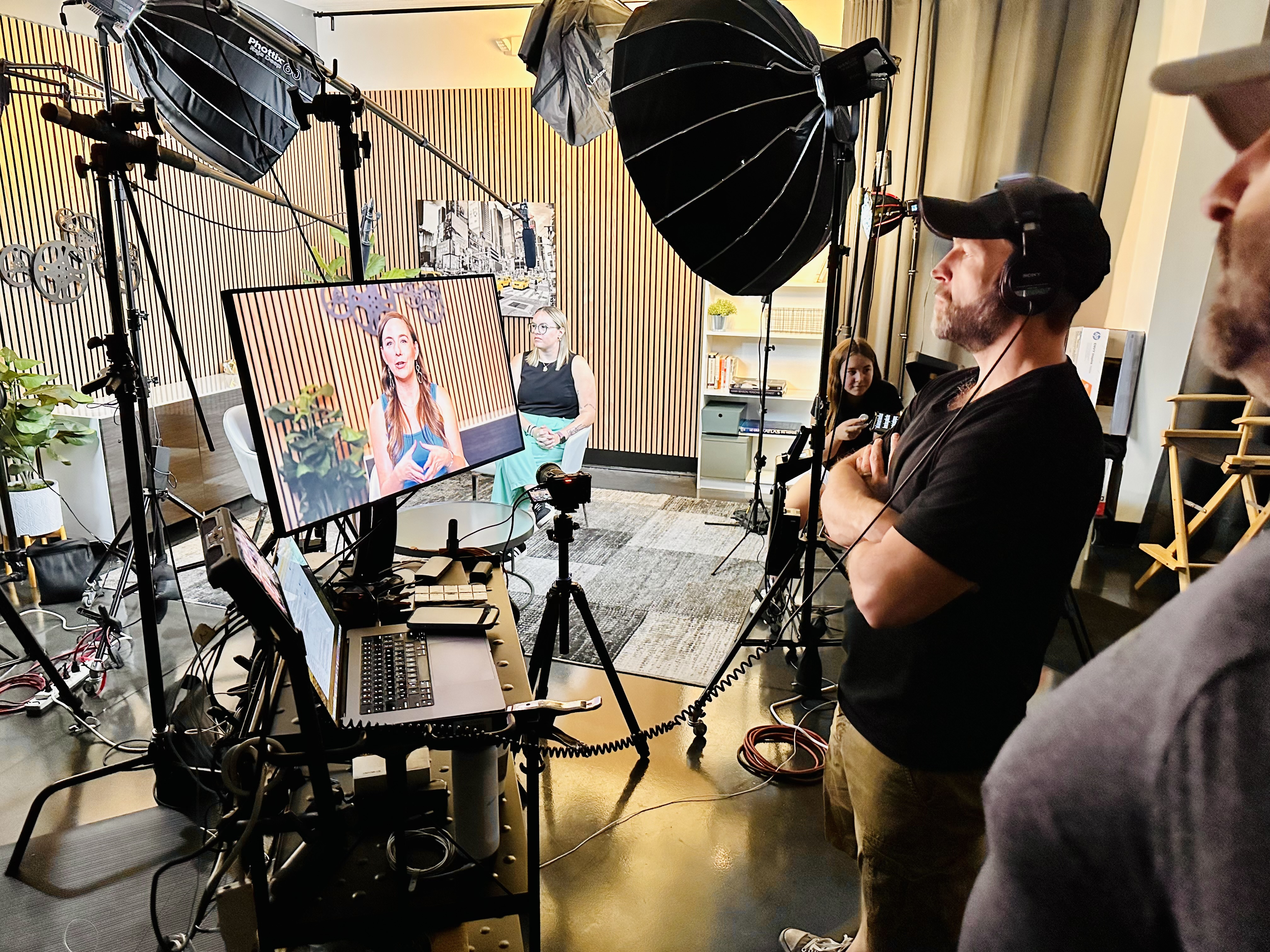
David Pichette directs every production at Mainstage. His role is not to operate equipment or manage logistics. It is to be the person who holds the creative vision from the first strategy call through the final delivery. Every tool, human or AI, serves that vision. The vision does not emerge from the tools.
David puts it plainly: "Video production is a truly hands-on process. All the tools in the world help with coordination, planning, and ideation. But when we are on set with our clients and talent, that is as human an experience as it gets. You cannot automate the moment when everything clicks into place."
That is what clients are buying when they work with Mainstage. Not software output. Not footage. A finished, considered piece of work with a point of view that belongs to their brand.
The Question to Ask Before Any Video Project
Before you commission any brand film or video, ask one question: who owns the creative direction on this project?
If the answer is a platform, a template, or a prompt, the output will reflect that. It will be competent and forgettable. If the answer is a producer and director who has taken the time to understand your brand, your audience, and what you are actually trying to achieve, the output will reflect that too.
AI will keep improving. The tools will keep getting faster. None of that changes the fact that someone has to decide what to make and why. That decision is not a feature. It is the whole product.
Work With a Team That Leads With Creative Direction
If you are planning a brand film, a commercial, or any video that needs to do real work for your business, the place to start is with a producer who will shape the vision before a single frame is shot. Explore how Mainstage approaches brand film and video production, or reach out to book a call with David and talk through what your project actually needs.